P2: Production Method
How to design (multiples) … Multiples are designed with the methods of research. Unlike the artist, the designer does not make a wonderful sketch and later find some reproduction technique. He experiments on a phenomenon which is optical, physical, geometrical, typological, mechanical … He refines the elements of communication, and studies the best material with which to produce the object for the maximum level of visual communication and the minimum level of cost. He finds the mechanical technique which best suits his purposes, and in the end a prototype is born — not a unique artistic creation, but a model for the creation of a series. Reproductions of artwork are always inferior to the original, but when designing a model for mass production, the prototype is always inferior to the final products.
– Bruno Munari, Codice Ovvio
Now that we've considered the tendencies and limitations of the "containers" which transmit our messages and facilitate our publishing, we will create our own production methods. If to publish is to "make information available to the public", how we think of publishing today often describes many steps in a process. In modern platforms the distinction between when something takes "form" and when something becomes "public" are often collapsed or difficult to disentangle. For instance, publishing a social media update is typically paired with creative tools that shape the information as well as the final(?) distribution step.
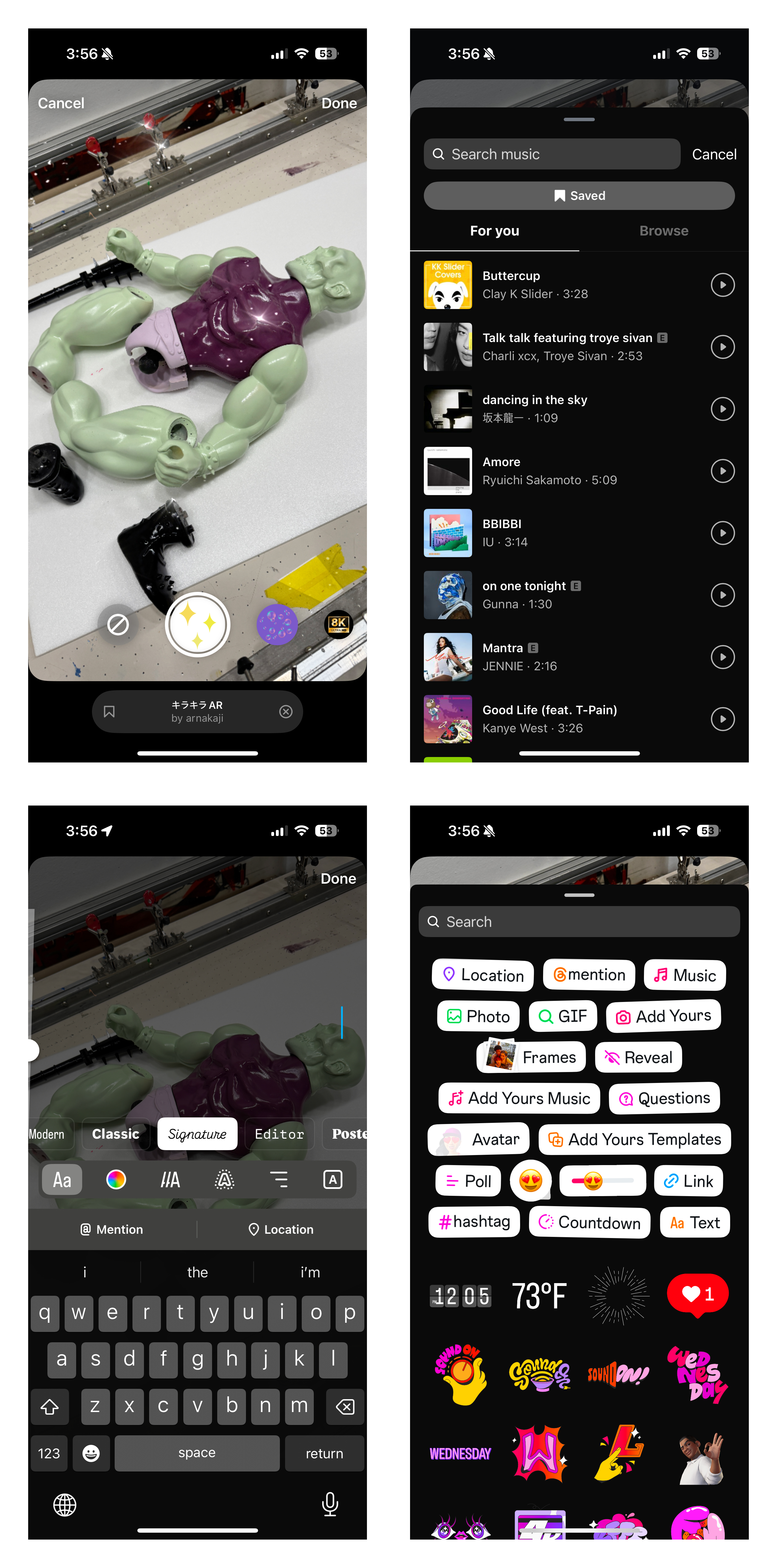
Instagram Stories Design Tools, by Meta
In this project we'll invent our own "form" making process that follow the rules and logics we choose rather than those of existing platforms. This can be very graphic, or it can be more conceptual. Don't feel like you have to make an "exciting" graphic outcome, but more that you are determining the rules for how information/content/etc. takes shape. You could make your own digital glitches, motion graphics, or printing method. Or perhaps you are responding to the accessibility of a digital platform (or lack thereof) for people with disabilities. Or, you want to question the environmental impact of digital processes, so you collect statistics around fossil fuel consumption when a digital process is run in a more straightforward way.
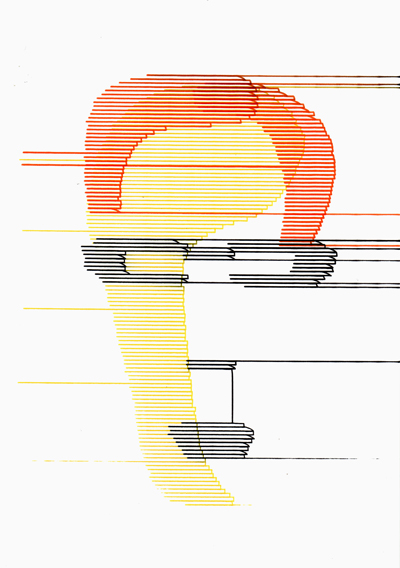
Penjet: Dries, by Jaan Evart, Julian Hagen and Daniël Maarleveld
You may think of this as a modified-printer or drawing machine, another process for translation between mediums, or a writing or collection prompt. You can extract "forms" from existing works through translation, editing, or other collecting and distillation processes. Or approach the project as something else entirely... It's up to you! As a starting point you may want to consider your P1 research and respond to it. Or you could take inspiration from another source all together.
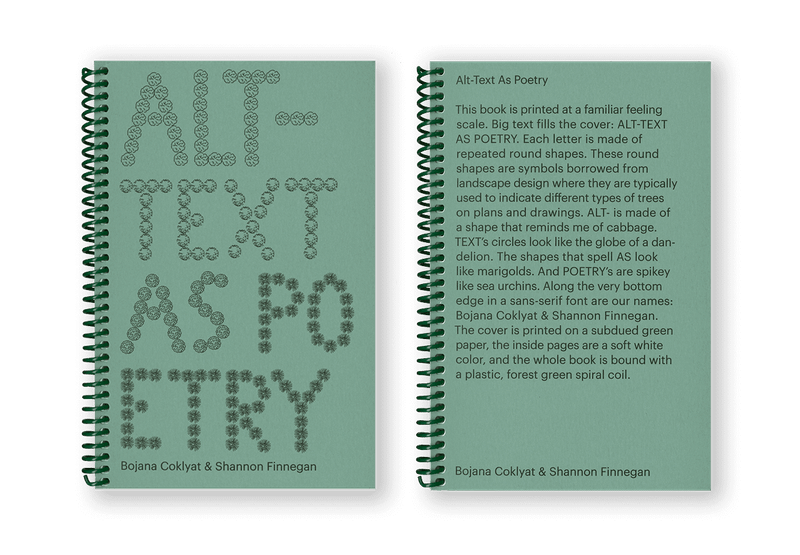
Alt Text as Poetry by Bojana Coklyat and Finnegan Shannon
After we've developed our production method, we'll then choose the "content" to publish and make a publication with the specfications of your choice.
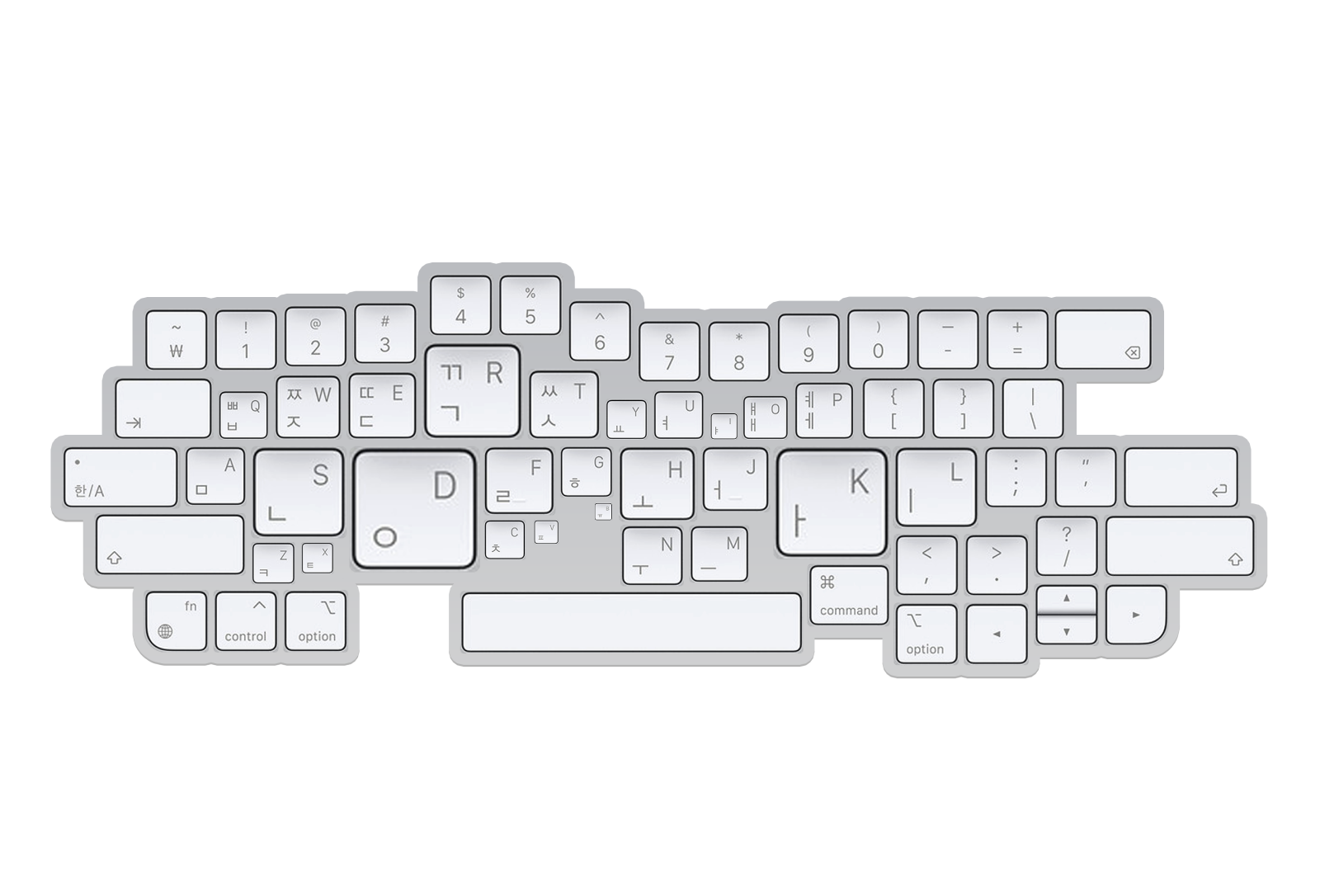
The Keyboard when Yuri is with Dayoung, by Yuri Sung
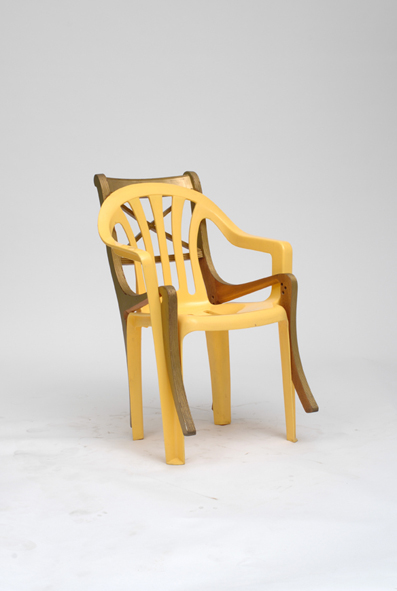
100 Chairs in 100 Days, Martino Gamper
Due Nov 28 (6 weeks)
Topics: Adaptation, Mass Production
Learning Outcomes
- Creating productive systems
- Developing our own methods for form creation
- Adapting existing tools for alternative uses
Requirements
- A "publication" with the format of your choice
Project Kickoff: Oct 17
Step 1: Due Oct 24
Draw 10 circles 10 different ways
To kickstart the project, create 100 circles using 10 different production methods. Format them as a slideshow (can be photos or digital drawings) consisting of 10 slides, with each slide containing 10 circles.
Step 2: Due Nov 7
Augment an Existing Tool
Next, consider the potential for misuse and appropriation of an existing product with our own motivation in mind. To do this, we will test the potential to create graphic outcomes by altering or "mis-using" a commercial product. You can create a digital or physical modification, a procedural or material intervention, and/or a combination of all of the above. For instance, you could take a non-art making tool and convert it to become one (adding a pencil to your computer mouse for instance). Introduce a new procedure into a product's use that results in a formal outcome (opening your computer operating systems Finder windows in a particular order, or renaming wi-fi networks to create a concrete poem). Or take an existing art-making tool and mis-use it (hold a pen in place, and write by moving a piece of paper).
Step 3: Due Nov 21
Standardizing your Tool
Based on Step 2, standardize/refine your production method. If you added a pencil to your mouse via tape, try 3d printing an augmentation to your mouse that can adjust the precise angle of the pencil as you use the device. If you developed a routine for analyzing and extracting text from Instagram posts, create a replicable "score" which you can follow to execute your routine in a predictable and rigorous fashion. Of course, you can also build or develop your own physical tools or scripts. As Munari mentions, one differentiation between design and art is design's tendency towards mass production. This step aims to transcend your experiments from a bespoke and craft process, to a mass replicable one. In the process of making it reproducable, unlock the project's true potential!
Step 4: Due Nov 28
Document/Publish
Now that you've created your standardized form-making/production technique, create a publication to display your process and thinking. If you created a printer modification, perhaps you will create a series of test prints that showcase its abilities. If you were responding to the limited support for screen-readers on a digital platform, perhaps you make a web-page meant to be read by a screen reader. Format your publication so it can be shared with the entire class.
Schedule
Week 8
Project kickoff

Week 9
Step 1 Due: Share 100 circles drawing

Week 10
Share experiments in product modification

Week 11
Step 2 Due: Share your finalized
product modification

Week 12
Begin standardizing your production method

Week 13
Step 3 Due: Finalize your
standardization method

Week 14
Step 4 Due: Share your publication
and production method
References
- 100 Chairs in 100 Days and Its 100 Ways by Martino Gamper and Åbäke
- Penjet by Jaan Evart, Julian Hagen and Daniël Maarleveld
- Couriers Sans by James Goggin
- Postcards from Google Earth by Clement Valla
- The Book of Chances by Sulki and Min
- Kinetic Political Abstraction by Sulki and Min
- Technical Drawings by Sulki and Min
- Poster Poster Poster Poster 2 by Sulki and Min
- Transitions by Sulki and Min
- Apple Heraldry by Minsun Eo
- An Exploration of Typographic Frames by Minsun Eo
- Graphic Magazine #12 Manystuff Special Issue by Graphic Magazine
- Alt Text as Poetry by Bojana Coklyat and Finnegan Shannon
- Times Dot by Laurel Schwulst
- Poetry Camera, by kelin carolyn zhang and Ryan Flomerfelt Mather