P1: Container
"Tools shape the way we behave. We point, swipe, skim, type, click, send. How can we reconsider the actions we perform in our daily interfaces? Identifying the constraints of these tools can help us recognize their poetic potential."
– Mindy Seu
“For us, makers, the creative process has transformed into a series of digital clicks and actions. These actions are temporary. Once executed, they disappear from the screen. We can hardly trace back how things looked when we were creating them. Is there a way we can archive, publish and reproduce these actions?”
– Ines Cox
Technically, to publish is to make information available to the public. Traditionally a "publisher" is described as a business or entity that makes and distributes books and magazines. However, since the popularization of the desktop computer and "Desktop Publishing", the term "publishing" and "publisher" has continuously evolved. Nowadays, publishing can entail sharing a blog post, posting a status update, publishing an "asset" to a digital marketplace, and the like, in addition to creating and distributing printed matter.
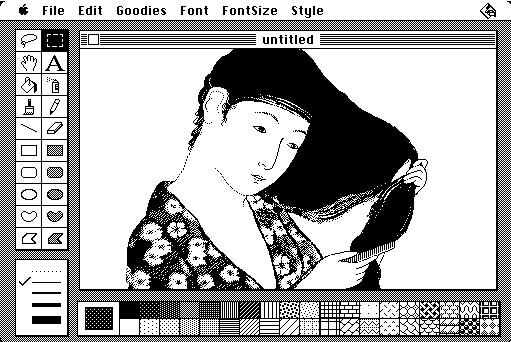
A picture in MacPaint 1.0, drawn by Susan Kare
At the same time, we're motivated and coerced to publish more than ever before. It's even been argued that it's easier to continuously publish about our lives than it is to selectively publish and maintain our privacy. Certainly, if you consider all of the unintentional "datatrails" we leave "publishing" this would be the case. Furthermore, within these always publishing ecosystems, our forms of expression are greatly limited – constantly being instrumentalized in order to mine value from our interactions.
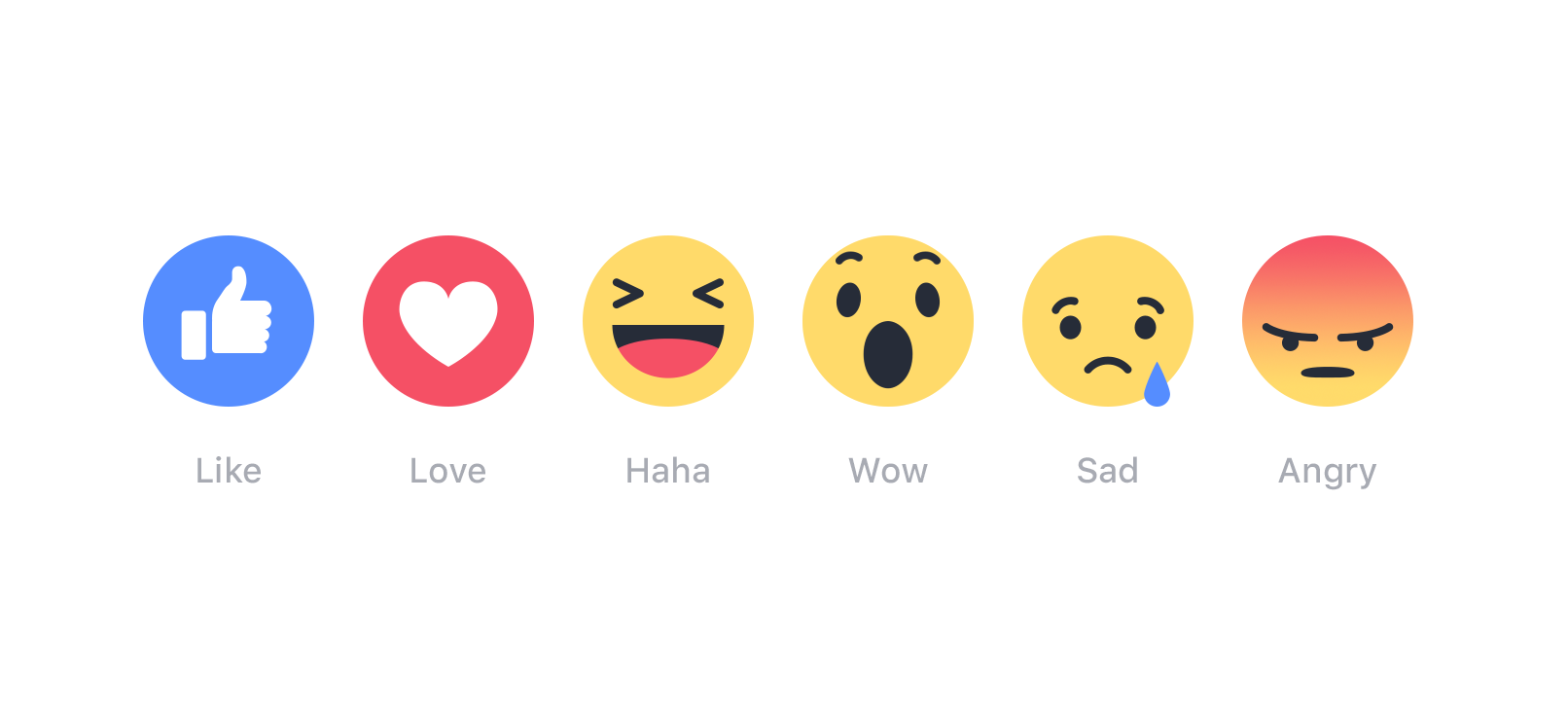
Facebook Reactions
Over the semester we will explore alternative ways to publish and create our own production methods to question, and circumvent, these platforms in order to creatively publish on our own terms.
To get started we will analyze existing online publishing tools, with an emphasis on form-making, to try and understand their mechanics and tendencies. These systems reframe our actions and communications as "data" in opaque and hard to understand processes. To unpack these processes, and their implications, we'll try to answer the questions:
- What is the underlying architecture of these online platforms?
- How can we translate the intangible interfaces experiences (clicks, scrolls, rollovers, animations, responsiveness, etc…) to visual form?
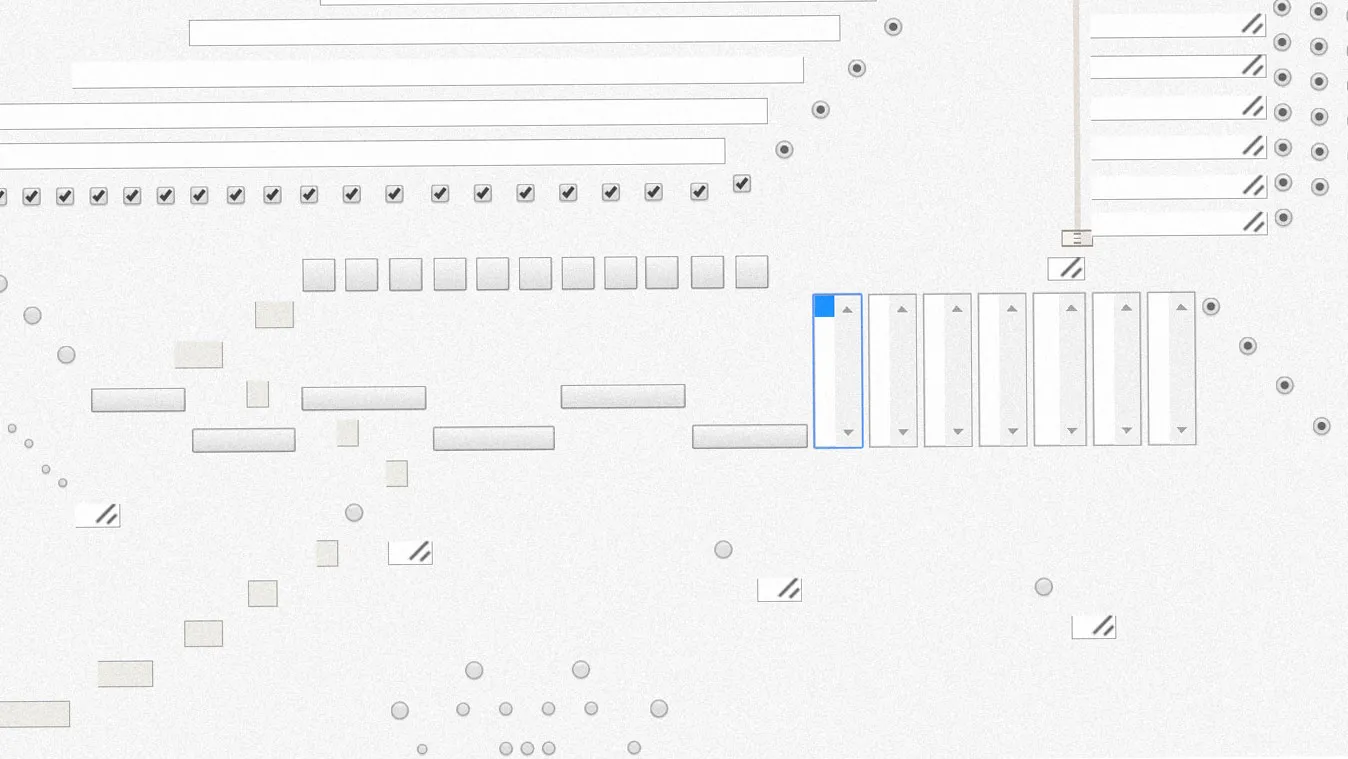
Homepage by Sebastian Ly Serena
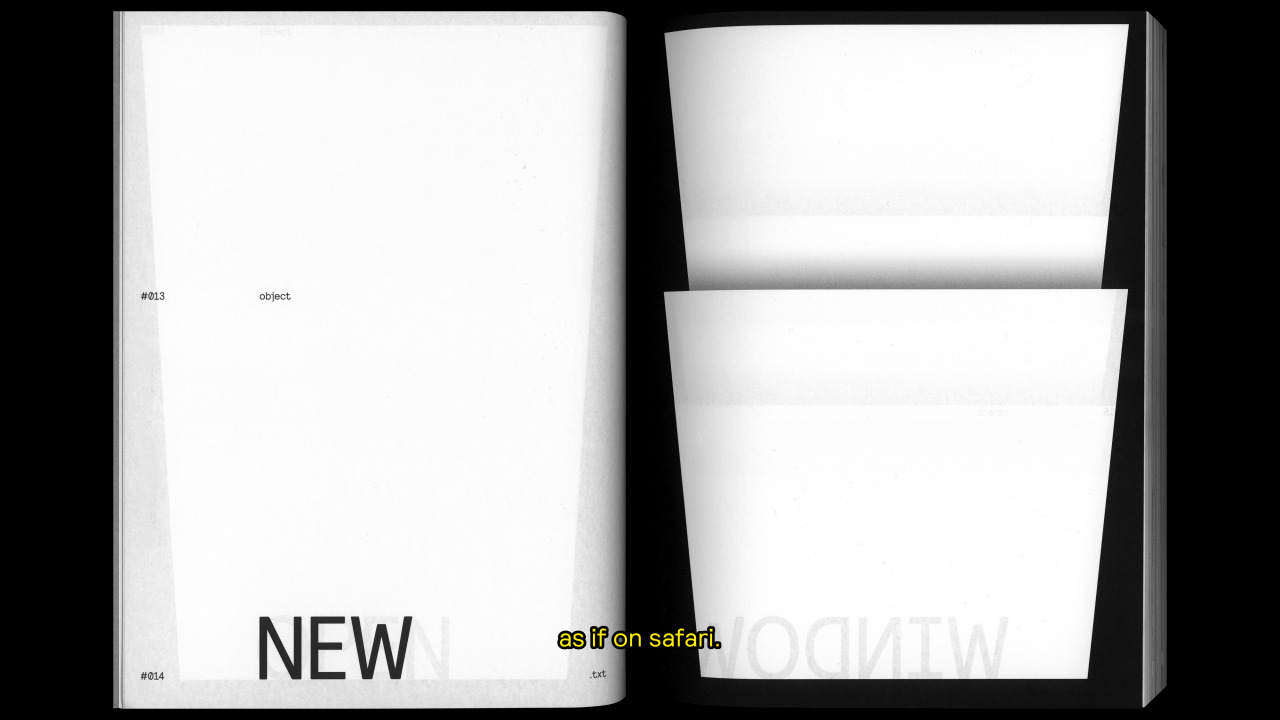
SAVE, Ines Cox
Due Oct 3 Oct 17 (4 weeks working time)
Topics: Interface Design, Form-Making, Poster Design
Learning Outcomes
- Experimenting with formal outcomes for a given piece of "information"
- Testing different transmission methods and their representations
Requirements
- An A1 (594 mm × 841 mm), black and white, poster (can be tiled)
- A printed or digital zine based on your posters and research
Project Kickoff / Step 1: Thurs Sep 12
Analyzing a Platform (in groups of 2)
In pairs select a platform / dissemination method from the following list (or add your own):
It's ok if multiple groups select the same platform.
After selecting your platform, write a description of what your interface does. Answer questions like:
- What is its purpose?
- What can it do?
- Who are its users?
- How would you describe the interface (intuitive, prescriptive, linear, random, etc…) / What are the interface’s characteristics?
- How does the platform mediate / privilege certain types of information?
Share with the class in a ~5 min presentation. Highlight 2-3 key observations about how the platform represents information, and what information it privileges.
We'll present before the end of class today!
Step 2: Due Sep 26
Analyze Platform Architecture (independently)
A digital platform has a "front" and "back" end – or the visible and invisible architecture which mediates communication. In this step you will analyze these “architectures” of your platform – reflecting on how they influence how we see and interpret content.
Observe, record, remix, recycle, map these digital actions and frameworks. The objective is to reveal the underlying architecture of your given platform that you studied and researched in Step 1.
Do exhaustive visual studies, create 21 versions printed on A3 (297 mm × 420 mm) paper for next crit.
You can use drawing (digital or analogue), building, photography, etc…
Constraints:
- Black and white only
- 7 × cut paper / photocopy
- 7 × on computer
- 7 × 3D
Step 3: Due Oct 03 Oct 17
Distill into a poster (independently)
Simultaneously distill and expand your sketches into a black and white poster (minimum A1 (594 mm × 841 mm) size) by adding type and/or images to them (if you want). The content of your poster is up to you, but it should be about your platform. Present two full-size (tiled is ok!) versions of your poster to discuss.
Update! Because we are adjusting the deadline due to the Gaecheonjeol holiday, and RE/Search's workshop, we will add a requirement to this project. In addition to your posters, translate your poster into a small zine – this can be printed and/or digital such as a short film or website. Be prepared to share your posters and zine with the class.
Schedule
Week 2
Project kickoff
Step 1: in-class platform research

Week 3
Optional class meeting at
100 Best Plakate at Doosung Paper Gallery

Week 4
Step 2 Due: Share platform analysis

Week 5
Holiday

Week 6
Workshop with RE/Search

Week 7
Step 3 Due: Share poster distillations + Zine addition
Reading
- The Poetry of Tools by Mindy Seu
- Ines Cox: The Process of Design Cannibalization interview with Ben Schwartz
- By Design: The pros and cons of new digital interface design by Alice Rawsthorn
References
- inescox.tumblr.com by Ines Cox
- abstractbrowsing.net by Rafaël Rozendaal
- Abstract Browsing Chrome Plugin by Rafaël Rozendaal and Reinier Feijen
- Facebook Demetricator by Ben Grosser
- sebastianlyserena.dk by Sebastian Ly Serena
- Today I Walked by Yehwan Song
- Sound Poster by Yehwan Song
- Cry don't cry by Yehwan Song
- clickclickclick.click by Studio Moniker
- Do Not Touch (Kilo by Light Light) by Studio Moniker
- Internet Cache Self Portrait series, by Evan Roth
- Landscape Painting by Aram Bartholl
- This is Fine by Aram Bartholl
- Isolated on White by Aram Bartholl
- Point of View by Aram Bartholl
- AI Assisted Circuits by Eva and Franco Mattes
- Personal Photographs by Eva and Franco Mattes
- Roomba Cat by Eva and Franco Mattes
- Mine by Simon Denny
- Family Maker by Ryan Kuo
- Postcards from Google Earth by Clement Valla